A cat or a dog is the animal most people picture, but Florida condos, short leases and long summers push plenty of households toward something smaller. A rabbit in a cool spare room, a bird near a shaded window or a guinea pig in an air-conditioned den can fit a space where a dog would not.
This post covers what registering one of those animals looks like on our site, which details we ask for, and what registration leaves exactly as it was. It starts with the one fact that applies to every animal: registration is optional and is not an ESA letter.
Our Florida ESA types guide says the climate and housing decide more about how an animal lives here than a favorite breed does. For some households, long summers and condo living point away from a dog that needs two walks a day on hot pavement.
That is where small companions come in. Our guides say rabbits, guinea pigs and birds can be calming where space is tight, as long as they are kept cool and out of direct sun. The condition is the whole point. A rabbit or a bird does not cope with a sunroom in August, so plan where the animal lives during the hottest hours of the afternoon before you plan anything else.
Federal guidance does not limit an ESA to dogs. Dogs and cats are by far the most common, but the guidance does not close the door on other domesticated animals. What changes is how the request is read: HUD's notice treats animals other than dogs as a more individualized assessment, and unusual species may face more scrutiny, as our complete Florida ESA guide explains.
In plain terms, a housing provider looking at a rabbit or a parakeet may ask more questions than it would about a cat. We read that as a reason to be ready, not a reason to give up. Be able to describe the animal and its care plainly: where it lives, what it eats, how it stays cool, and how you handle cleaning in a shared building.
More scrutiny does not mean a denial, and no letter guarantees a landlord's answer. For a specific lease, a Florida-licensed attorney can advise where we cannot.
To register an animal of any kind, you must be eligible for an emotional support animal and have an ESA letter. Registration does not come before the letter.
The letter comes from a licensed health care or telehealth practitioner who has personal knowledge of your disability-related need. Under Florida Statute 760.27 that practitioner must be licensed in Florida or have an established in-person relationship with you. See who can write an ESA letter in Florida. If you want a rabbit or a bird covered, say so openly during your evaluation; the clinician decides, and our guide to how many ESAs you can have shows why each animal needs its own documented need.
Registering a small animal, however carefully, gives you no ESA rights and no additional rights. Housing protection comes only from a letter written by a licensed practitioner. Florida Statute 760.27 says an online registration alone is not sufficient documentation.
The registration steps are the same for every animal, so a bird needs no separate process.
On the animal screen, the type menu offers Dog, Cat or Other, and the breed field is a type-ahead search. A rabbit, bird or guinea pig falls under Other. Enter the breed or variety as best you know it, and use your veterinarian's description if you are unsure.
A few fields deserve a little thought when the animal is small. This table compares what the form asks for with what that usually means for a rabbit, bird or similar companion.
| Field | What We Ask For | Note for a Small ESA |
|---|---|---|
| Animal type | Dog, Cat or Other | Choose Other for a rabbit, bird or guinea pig |
| Breed | Type-ahead search | Enter the breed or variety as best you know it |
| Sex | Male or female | Ask your veterinarian if you are not sure |
| Birthday | A best guess is fine | Many small animals come from rescues, so an estimate is expected |
| Weight | In pounds | Weigh the animal at home or at the vet; small animals may be well under a pound or two |
| Microchip number | Optional | Leave blank if the animal has none |
The photo matters more than it seems. It is what builds the lost pet recovery record, so a shelter can match a found animal to you. Take a clear, well-lit picture that shows markings, color and size. Do not assume any animal is microchipped; a photo and accurate details carry the weight when there is no chip number.
Every registered animal gets the same benefits. Lost pet recovery comes first. Registration is lifetime, per pet, in our ESA and lost pet recovery database, so a shelter or anyone who finds your animal can look it up by microchip number or ID number and reach you.
Now the limits. Registration does not make a rabbit easier to approve than a cat, it does not make a landlord more likely to say yes, and no landlord is required to use the registry or accept the ID card. It does not give air travel or public access rights either. See taking an ESA into public places.
A small animal can slip through a door or a carrier gap quickly. Lost pet recovery is worth most to the animals that are easiest to lose.
Keep the animal indoors in air conditioning during the hottest hours, away from sunny windows and out of direct sun. Think through how you will keep it cool if a storm cuts the power.
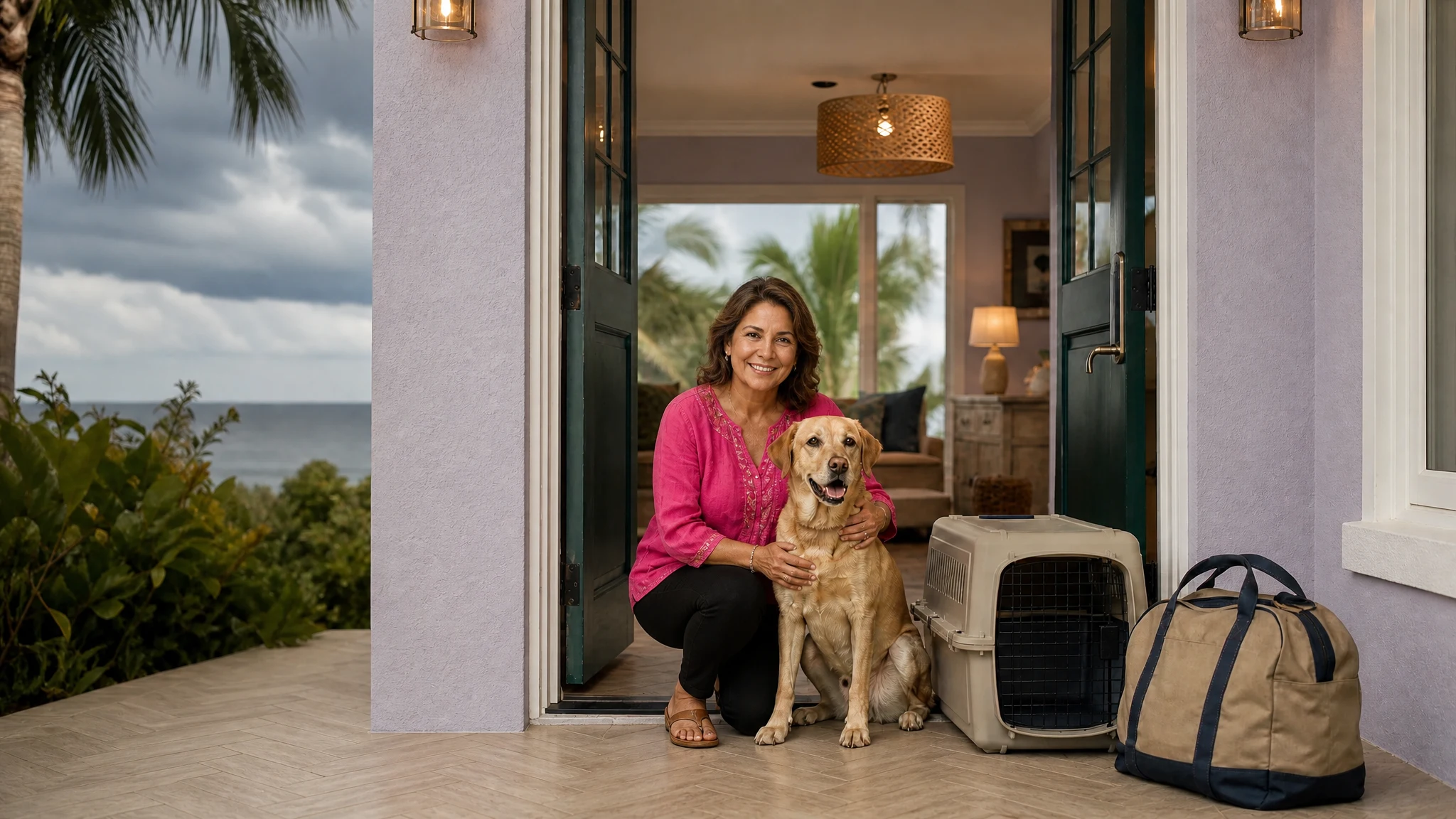
Hurricane season runs June to November. Our guides recommend a carrier, a few days of food and water, medications, vaccination records and a current photo for any animal, and pet-friendly lodging identified before a storm is forecast. A frightened small animal can bolt, which is where a registration record and photo help.
Many condos and HOAs have strict pet rules, and breed and weight limits are written with dogs in mind. An assistance animal request is handled as a reasonable accommodation, not an ordinary pet application. Read our guides on HOA and condo denials and breed and weight restrictions before you write your request. For a comparison with a lower-exertion, indoor option, see emotional support cats in Florida.
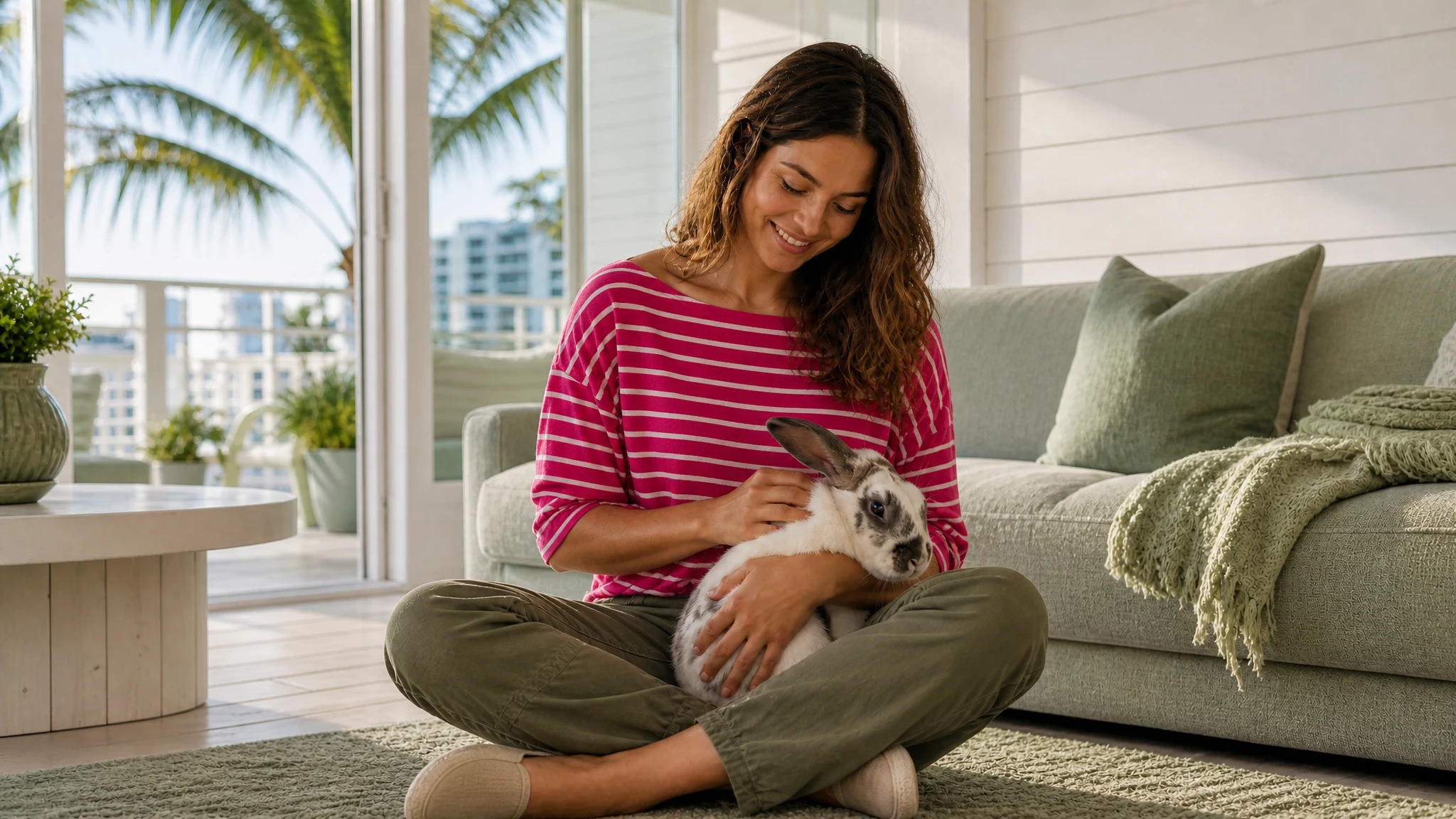
Our position is simple. Register a rabbit, bird or other small animal if lost pet recovery and the optional extras are worth it to you, and only after you have your letter. Do not register expecting it to carry the request with a landlord.
Be wary of any seller that offers a certificate for a bird or a rabbit and implies it replaces a letter. Our guide to ESA registration in Florida and the legitimacy section help you tell a real service from a fake one. Florida Statute 817.265 makes falsifying ESA documentation a second-degree misdemeanor.
If your housing question is the pressing one, start with the ESA housing section. If you are still deciding on an animal, the ESA types section compares your options for Florida life.
Below, we answer the most commonly asked questions about Registering a Small ESA in Florida.
You can register one if you are eligible for an emotional support animal and have an ESA letter. On the form, a rabbit or bird falls under the Other animal type. Registration is optional and gives no ESA rights or additional rights.
The animal's name, type, breed, sex, birthday (a best guess is fine) and weight. A microchip number is optional. You also upload a photo, and we email you after purchase so you can do that.
No. The microchip number is optional. A shelter can look up a registered animal by microchip number or ID number, so a clear photo and accurate details matter more when there is no chip.
HUD treats animals other than dogs as a more individualized assessment, so a landlord may ask more questions. Registration does not change that, and no landlord is required to accept the registry or ID card. Your ESA letter and a clear care plan are what support the request.
No. Registration is not a substitute for an ESA letter and gives no ESA rights. Florida Statute 760.27 says an online registration alone is not sufficient documentation.
Keep reading: our other guides in this topic, newest registration guides first.

Registering an emotional support cat in Florida: what you enter, the optional microchip, the photo, lost-cat recovery in storms, and what stays the same.

Registering your emotional support dog in Florida: what you enter, how lost-dog records help after storms, and what registration does not change.

Hurricane season planning for a Florida emotional support animal: go-bag, pet shelter limits, lost pet recovery and what an ESA letter does not do.

How the lost pet recovery database in Florida ESA registration works: what the record holds, how a finder reaches you, and what it cannot promise.

Short answer: generally no. Under Florida law, an emotional support animal (ESA) does not carry a public access right, so restaurants, shops, and hotels in Miami, Orlando…

Florida owners often use "service animal" and "emotional support animal" as if they meant the same thing. Under federal and Florida law they do not. The two differ in…
If you already have your ESA letter and want a lifetime lost pet recovery record for your rabbit, bird or other small companion, you can start your Florida registration on our homepage. Registration is optional and does not replace the letter.
Register My Florida ESABrowse All Florida ESA GuidesRegistration is optional. It is not a substitute for an ESA letter and gives no ESA rights or additional rights; a letter from a licensed health care or telehealth practitioner is what carries housing rights.