ESA Registration for Cats in Florida: What to Know Before You Register
Home › Best FL ESA Types › ESA Registration for Cats in Florida: What to Know Before You Register
Florida ESA Guide · Best FL ESA Types

ESA Registration for Cats in Florida: What to Know Before You Register

A cat that lives indoors in an air-conditioned Florida condo is a different registration case from a dog that goes out three times a day. Your cat rarely meets a stranger, a shelter scanner or a vet's front desk, until a storm opens a door and the cat is gone.

7 min readUpdated November 15, 2026Florida-specific

This guide walks through registering an emotional support cat in Florida: the details you enter, why the microchip number is optional but useful, the photo, and how a lost-cat record helps when evacuations get chaotic. It also says plainly what registration does not change.

Key Takeaways About ESAs in Florida

  • Registration is optional, and you need to be eligible for an emotional support animal and have an ESA letter to register.
  • Your cat's record holds name, type, breed, sex, birthday, weight and a photo. The microchip number is optional.
  • The lost pet recovery database is the practical benefit: a shelter or finder can look up your cat by microchip or ID number.
  • Registration changes nothing about housing or public access. Only a clinician's letter carries housing rights.

Why Indoor Cats Make Registration in Florida a Different Question

Our guide to emotional support cats in Florida describes the typical Florida cat well: indoors, in air conditioning, often in a condo or HOA community where space is limited and the afternoon heat is not. That lifestyle is safe from heat stress and traffic, but it creates a quiet gap. A cat that never leaves the unit often has no tag in use, no neighbors who know it by sight and no routine that a stranger would recognize.

Registration Is Not a Substitute for an ESA Letter

Registering your cat does not replace an ESA letter and gives no ESA rights or additional rights. To register, you need to be eligible for an emotional support animal and have an ESA letter already. The letter, written by a licensed health care or telehealth practitioner, is what carries housing rights under the Fair Housing Act and Florida Statute 760.27.

What You Enter for Your Florida Emotional Support Cat

Registration runs in three steps, and the middle one is all about the cat. Here is the whole sequence so nothing surprises you.

  1. Submit Your Contact InformationYou confirm you meet the ESA requirements. This is where eligibility is stated, which is why the letter comes first.
  2. Submit Your Cat's Information and PhotoName, type, breed, sex, birthday and weight, plus an optional microchip number. We email you after purchase so you can upload the photo.
  3. Receive the Animal ID and Certificate by MailOnce they arrive, lost pet recovery and legal support unlock.

Enter the details exactly as they are on your vet records. If a shelter ever reads the record next to a real cat, a matching birthday and weight help them confirm they have the right animal. Cats are often adopted without a known birthday, so use the date your vet lists.

The Microchip Number for a Florida ESA Cat: Optional but Useful

The microchip number is the one optional field in the cat's record. Leaving it blank does not block registration, and the database can also be searched by the ID number we assign. Still, if your cat has a chip, adding the number gives a shelter the same lookup path it already uses.

Registration complements a microchip and does not replace it. The cats guide recommends a microchip with current contact details, plus a breakaway collar with a tag, so a shelter has more than one way to reach you. If your vet has not chipped your cat yet, the guide suggests setting one up from the start, along with flea prevention and vaccination.

Way a Finder Can Reach YouWhat It Relies OnWorks Alone?
Microchip with current contact detailsA scanner at a vet or shelterYes, if the details are current
Breakaway collar with a tagThe cat still wearing itOnly until the collar comes off
Lost pet recovery database recordA lookup by microchip or ID numberAdds a second path, not a replacement

The Photo Step for Your Florida ESA Cat

After purchase we email you a link to upload your cat's photo. A photo matters more for cats than people expect, because many cats look alike at a glance, especially tabbies and solid blacks. The cats guide also tells owners to keep a recent photo of the cat in the evacuation supply kit, so the same picture can serve both purposes.

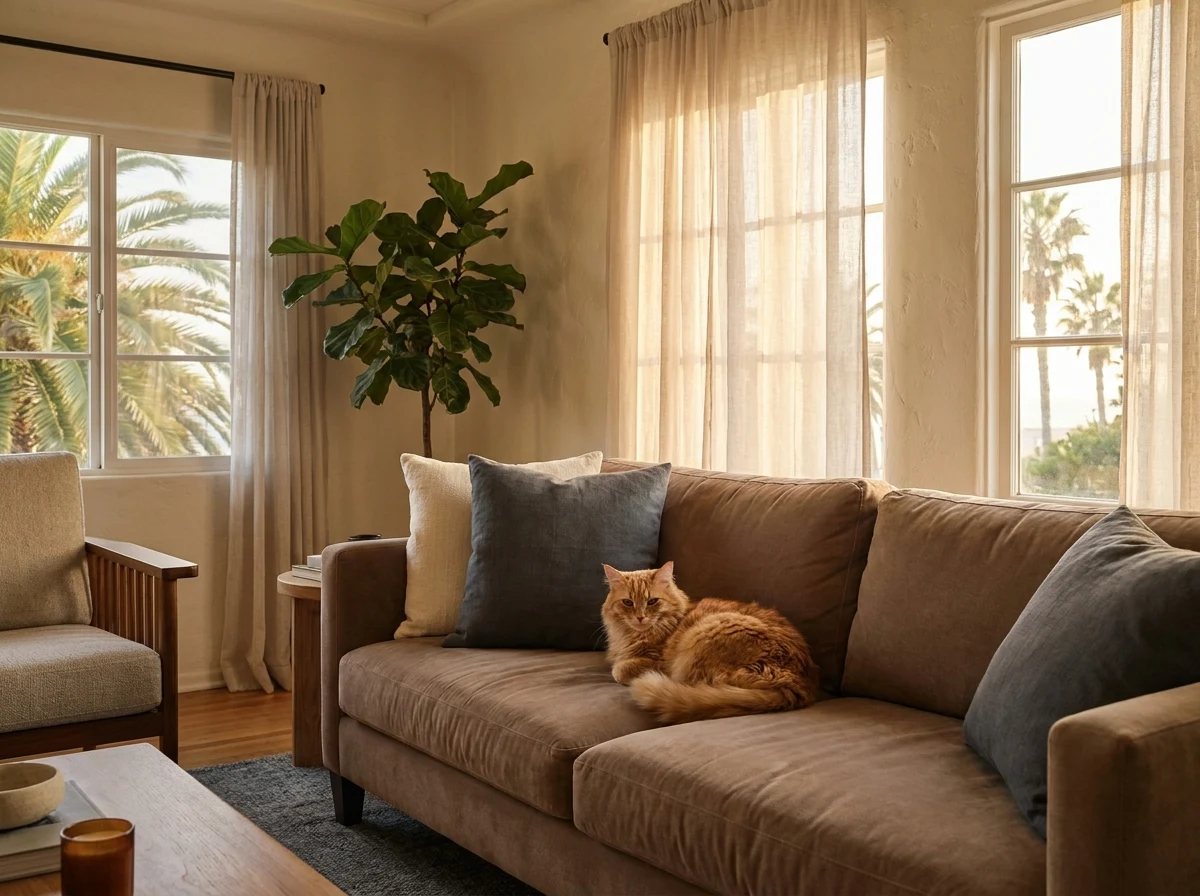
a cat on a sofa in a bright apartment, no text
An indoor cat in a Florida apartment, the typical case this guide is written for.

How a Lost-Cat Record Helps During Florida Hurricane Season

Hurricane season runs from June to November, and the cats guide is blunt about the risk: cats are escape artists under stress. A frightened cat in an evacuation shelter parking lot or a storm-damaged house can slip out of an open door, and many are lost in the chaos after landfall.

This is where registration has a practical, non-legal role. Your cat is added for life to an ESA and lost pet recovery database, so a shelter or anyone who finds your cat can look it up and reach you. We will not claim it reunites every cat; it may help, and it works best alongside a chip and a tag.

A Storm Checklist for Florida ESA Cat Owners

For the wider setting, see our complete guide to emotional support animals in Florida covers the wider setting.
What Registration Does Not Change About ESA Housing in Florida

A registered cat in a condo is treated exactly like an unregistered one. Florida Statute 760.27 says a landlord may request reliable information from a health care or telehealth practitioner, who must be Florida-licensed or have an established in-person relationship with you. A landlord may not demand a diagnosis or medical records. An online registration alone is not sufficient documentation.

Condo and HOA documents can still restrict animals, so read them first. Our guide on whether an HOA or condo association can deny an emotional support animal explains how those rules meet fair housing law, and Florida ESA housing laws covers what landlords must allow.

The registry listing is one piece: a landlord may look it up to see you worked with a legitimate company, but no landlord is required to use the registry or accept it. See how Florida landlords verify an ESA letter for what they actually review.

SituationWhat Carries WeightWhat Registration Adds
Condo asks for documentationA clinician's ESA letterNothing legally; a record a landlord may look up
Landlord rejects the catThe letter and Fair Housing Act rulesAccess to a legal support team for housing matters, no guaranteed outcome
Cat is lost after a stormA microchip and a findable recordLifetime database listing for lookup

Public Access, Travel and the Limits of an ESA Cat Registration in Florida

The animal ID card and certificate identify your cat. They carry no legal housing rights, and they do not open doors to stores, restaurants or airplane cabins. Public access belongs to service animals, and airlines have treated emotional support animals as pets since the 2021 DOT rule. We do not register service dogs. For the difference, see ESA vs. service dog in Florida and taking an ESA into public places.

Who Should Skip Registration

If your only goal is a housing request, the letter is the document that matters, and registration is optional. Start with the registration and letter process and the Florida ESA letter requirements first. Registering makes sense when the lost-pet record and ID card appeal to you on their own.

Before You Register Your Florida ESA Cat: A Short Decision Path

Work in this order: confirm you are eligible, get the letter from a licensed practitioner, then register if the extras are useful. Our qualifying guide for Florida covers eligibility, and why registration is not an ESA letter explains the difference at length. The legitimacy section shows how to tell a real letter from a fake. Registered members also get $25 off an ESA letter consultation. Approval is never automatic; the clinician decides whether an ESA is therapeutically appropriate for you.

Frequently Asked Questions About ESA Registration for Cats in Florida

Below, we answer the most commonly asked questions about ESA Registration for Cats in Florida.

Do I Need a Microchip to Register My Cat as an ESA in Florida?

No. The microchip number is optional. If your cat has a chip, adding the number lets a shelter look the record up by that number; otherwise the ID number works.

What Information Do I Enter When Registering an Emotional Support Cat?

Your cat's name, type, breed, sex, birthday, weight and an optional microchip number, plus a photo that we email you to upload after purchase.

Will Registering My Cat Help if It Escapes During a Florida Hurricane?

It may help. Your cat is in a lifetime lost pet recovery database that a shelter or finder can search by microchip or ID number. It complements a microchip and tag and does not replace them.

Does Registering My Cat Change My Condo or Apartment Rights in Florida?

No. Housing rights come from an ESA letter from a licensed practitioner. Florida Statute 760.27 says an online registration alone is not sufficient documentation.

Can I Register My Cat Before I Have an ESA Letter?

No. You must be eligible for an emotional support animal and have an ESA letter to register. If you do not have one yet, start with the letter process.

Keep Reading

More Best FL ESA Types Guides

Keep reading: our other guides in this topic, newest registration guides first.

View All Florida ESA Guides

Register Your Florida ESA Cat

If you are eligible and have your ESA letter, you can register your cat for lifetime lost pet recovery and an animal ID card. Registration is optional and does not replace the letter.

Register My Florida ESABrowse All Florida ESA Guides

Registration is optional. It is not a substitute for an ESA letter and gives no ESA rights or additional rights; a letter from a licensed health care or telehealth practitioner is what carries housing rights.