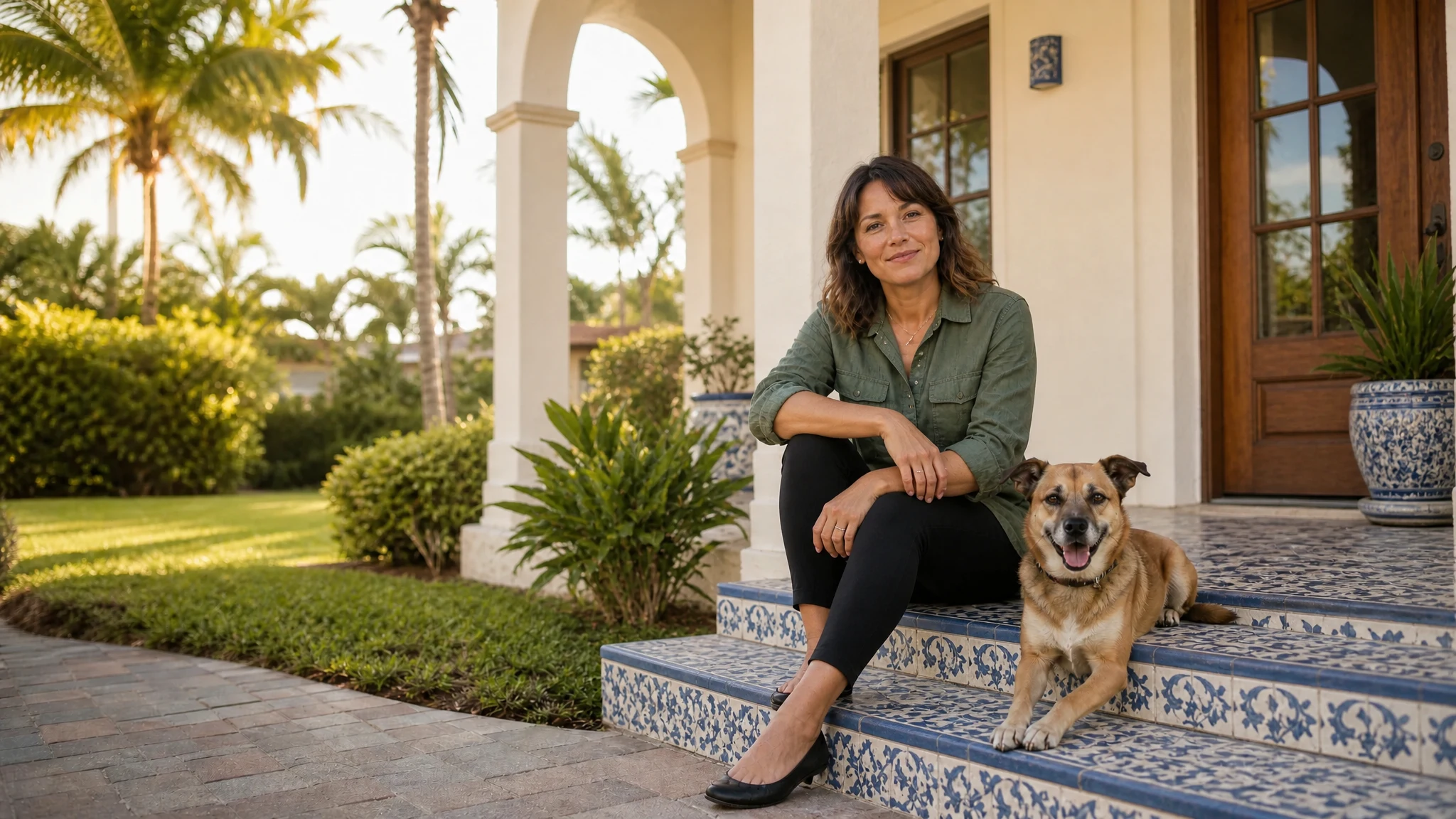
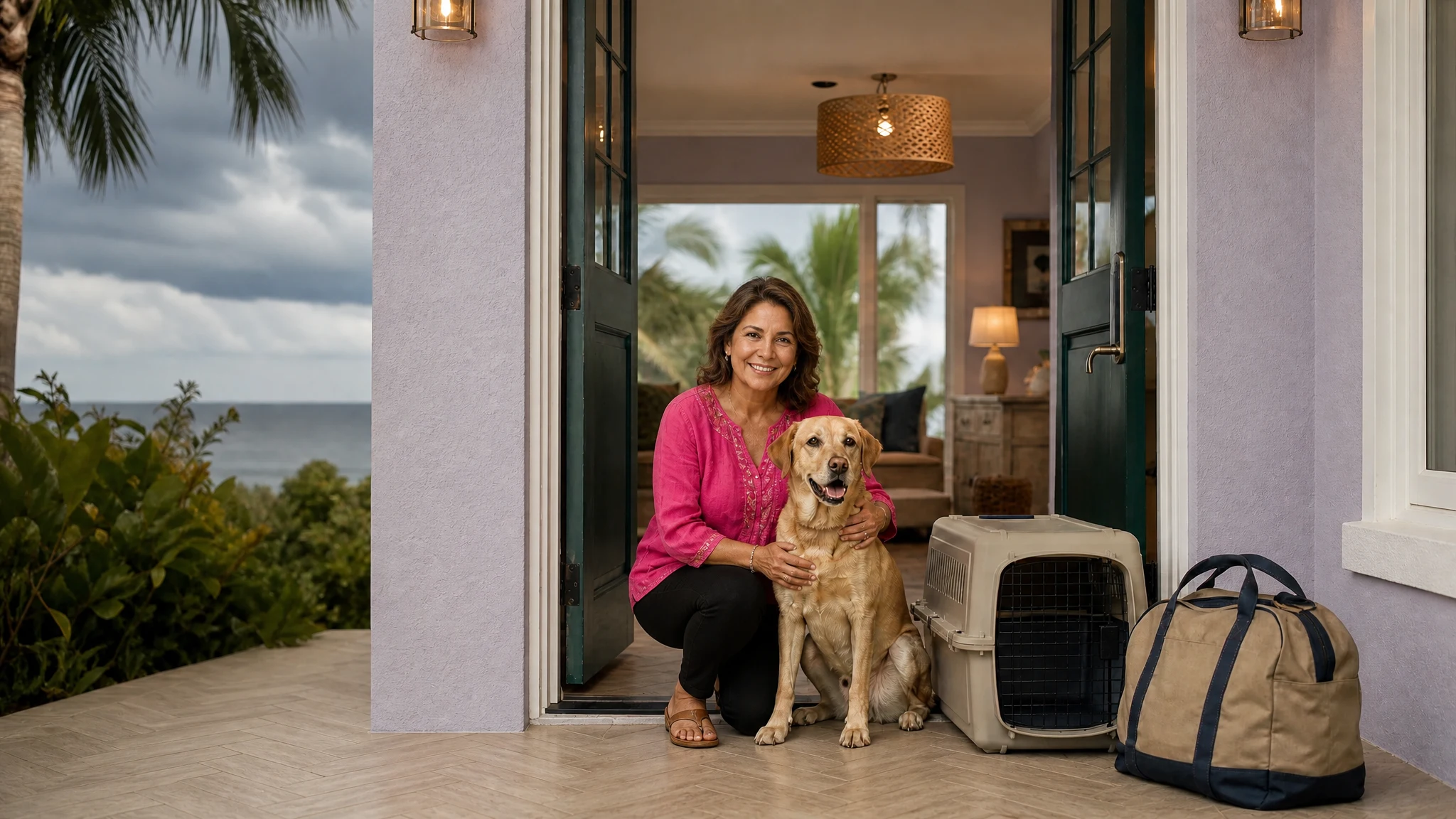
Of the five benefits that come with optional Florida ESA registration, the lost pet recovery database is the one that does its work on the worst day. A storm scatters a neighborhood, a gate is left open, a frightened animal bolts, and a stranger needs a way to find you.
This guide walks through what the record holds, how a shelter or finder uses it, why Florida makes it matter, and what it cannot do. To register you must be eligible for an emotional support animal and have an ESA letter.
When we explain registration to a Florida owner, we start with lost pet recovery and put the other benefits after it. None of the other benefits helps when your dog is loose in another county. A record a stranger can search does.
For the legal framing, read why registration is not a legal requirement in Florida.
The database does not make an animal an ESA. Registration is not a substitute for an ESA letter, and it gives no ESA rights and no additional rights. Housing rights under the Fair Housing Act and Florida Statute 760.27 come only from a letter from a licensed health care or telehealth practitioner, and you need that letter before you can register.
Each registered animal gets its own lifetime record in our ESA and lost pet recovery database.
| What You Provide | Why It Matters | Required? |
|---|---|---|
| Your contact information | It is how a finder or shelter reaches you | Yes |
| Name, type, breed, sex | It lets a finder check the animal in front of them | Yes |
| Birthday and weight | It narrows a match between similar animals | Yes |
| A clear photo | It is the fastest way to confirm a match by sight | Yes, uploaded after purchase |
| Microchip number | It gives a shelter an exact number to search | Optional |
| ID number | It is the other way a record can be looked up | Assigned to the record |
We email you after purchase to upload the photo, so do not let that email sit. Step two of registration, adding your animal's details and a clear picture, is what builds the recovery record, so a shelter can match a found animal to you.
The lookup is built around two identifiers. A shelter or anyone who finds your animal can search by microchip number or by ID number, then reach you through the contact details on the record. That is the whole idea, and it is deliberately plain.
If your animal wears a collar with current tags, as our guide to emotional support dogs in Florida suggests for storm season, a finder has two ways to start instead of one.
Florida gives animals more reasons to get separated from their owners than most states do, and three of them come up again and again.
Hurricane season runs from June to November. Evacuations are rushed, shelters often do not accept pets, and families sometimes end up in different places than planned. Our complete guide to emotional support animals in Florida covers how storm season shapes the way you live with an animal. An animal that slips away in the confusion is exactly the case a lifetime record is for.
A frightened dog does not stay near the house, and in Florida summer heat a loose animal is in trouble fast. That is a reason to want a finder to reach you quickly, not a reason to expect it.
Many Florida owners live in condos, HOA communities and rentals where gates, balconies and shared walkways are part of daily life, and snowbird markets mean people move between addresses. A current way to reach you matters more then.
A lifetime record does not stay accurate on its own. Treat it like your veterinarian file and check it when your life changes.
Hurricane season begins in June. In spring, confirm your contact details, photograph your animal, and put the ID card in the bag with vaccination records and medications.
The database gives a finder a way to reach you. It does not promise a reunion. Someone has to find the animal, read the number and act. Any step can fail.
| The Database Does | The Database Does Not |
|---|---|
| Hold a lifetime record for your animal | Promise a lost animal will come home |
| Let a finder search by microchip or ID number | Search for your animal on its own |
| Give a finder your contact details | Make a finder or shelter use it |
| Support your own care and preparation | Replace a collar, tags or a leash |
| Sit beside your ESA letter | Act as an ESA letter or carry housing rights |
It also has nothing to do with housing. A landlord may look up the registry to see you worked with a legitimate company, but no landlord is required to use it or accept it, and Florida Statute 760.27 says an online registration alone is not sufficient documentation. For that conversation, read what Florida landlords must allow.
A registered record is useful on the sidewalk and meaningless at a leasing office. Only a licensed practitioner's letter supports a housing request, and registration cannot stand in for it.
Our view is that the lost pet database is the part of registration most worth having, and we say that while being clear it is optional. It suits owners who live where storms, open doors or shared spaces raise the odds of separation, and owners who already do the basics: collar, tags, a microchip, a current photo. It adds a layer and replaces none of them.
It is a poor reason to register if you hope it will help with housing, travel or public access. Registration carries no air travel or public access rights, and we do not register service dogs. If your real question is about a landlord, start with the ESA process, Florida ESA housing laws or whether an HOA or condo can deny an ESA.
Not sure you qualify? Start with our qualifying guide and the Florida ESA letter requirements. Registration comes after the letter, not before.
Once you have the letter and decide to register, the three steps are: submit your contact information and confirm you meet the ESA requirements, submit your animal's details and photo, then receive your ID and certificate in the mail, which unlocks lost pet recovery and legal support.
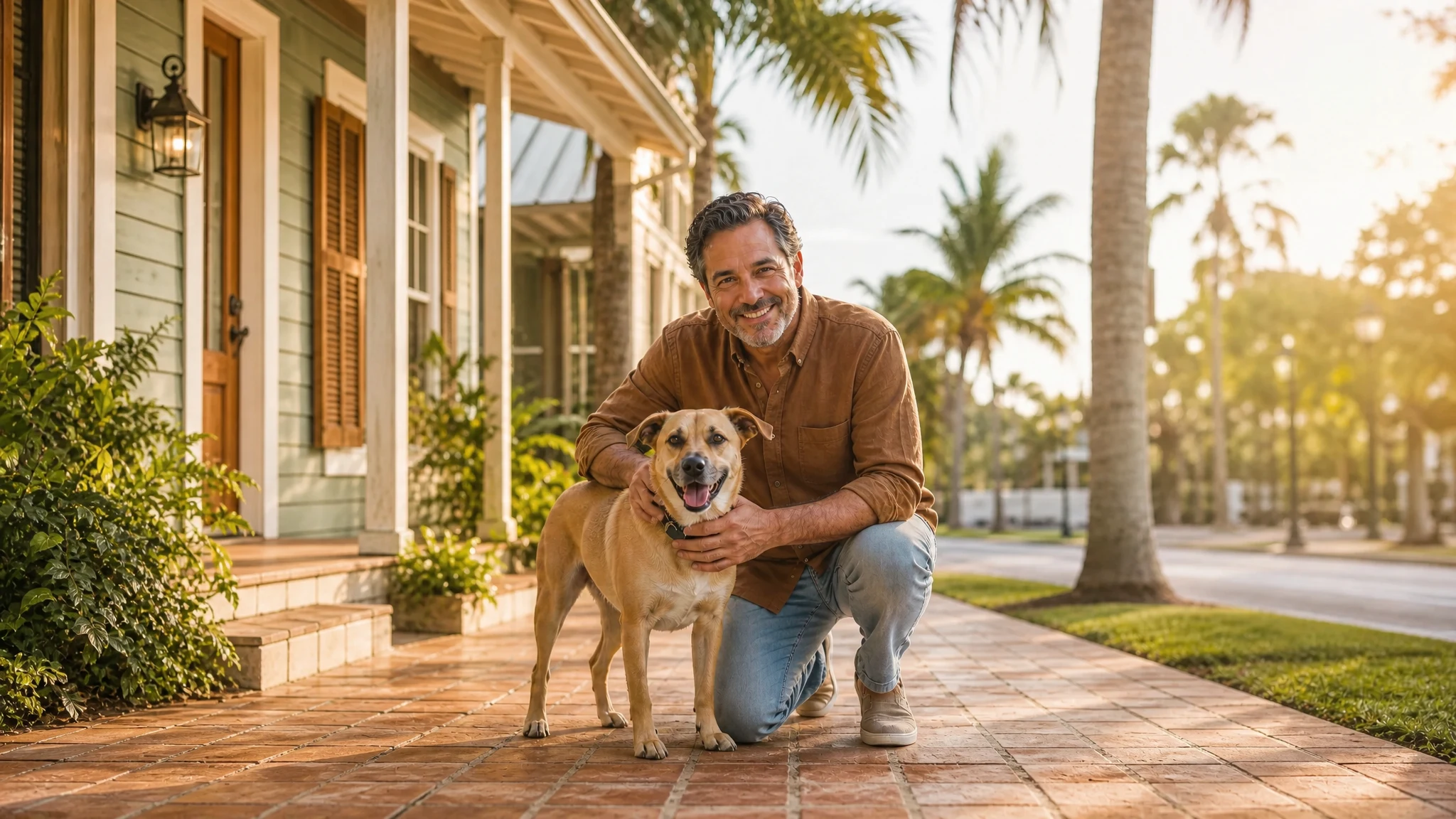
Below, we answer the most commonly asked questions about Lost Pet Recovery for Florida ESAs.
A shelter or anyone who finds your animal can look it up by microchip number or ID number. The record holds your contact information, so they can reach you. It works only if the number is readable and someone checks it.
No. The microchip number is optional when you submit your animal's information. Your animal also has an ID number, which is the other way a record can be looked up. A microchip number simply gives a finder one more exact way to search.
No. It gives a finder a way to reach you, but it cannot promise a reunion. Pair it with a collar and current tags.
Registration is lifetime for each pet, so the record stays in the database for life. Review it whenever something changes.
No. The database is for recovery, not housing. Registration is not a substitute for an ESA letter, and under Florida Statute 760.27 an online registration alone is not sufficient documentation. Only a letter from a licensed practitioner supports a housing request.
Keep reading: our other guides in this topic, newest registration guides first.

Registering an emotional support cat in Florida: what you enter, the optional microchip, the photo, lost-cat recovery in storms, and what stays the same.

Registering your emotional support dog in Florida: what you enter, how lost-dog records help after storms, and what registration does not change.

Hurricane season planning for a Florida emotional support animal: go-bag, pet shelter limits, lost pet recovery and what an ESA letter does not do.

Registering a rabbit, bird or other small emotional support animal in Florida: the form fields, the photo, and what registration does not change.

Short answer: generally no. Under Florida law, an emotional support animal (ESA) does not carry a public access right, so restaurants, shops, and hotels in Miami, Orlando…

Florida owners often use "service animal" and "emotional support animal" as if they meant the same thing. Under federal and Florida law they do not. The two differ in…
If you already have an ESA letter, you can add your animal to our lifetime lost pet recovery database. Start your Florida ESA registration when you are ready.
Register My Florida ESABrowse All Florida ESA GuidesRegistration is optional. It is not a substitute for an ESA letter and gives no ESA rights or additional rights; a letter from a licensed health care or telehealth practitioner is what carries housing rights.