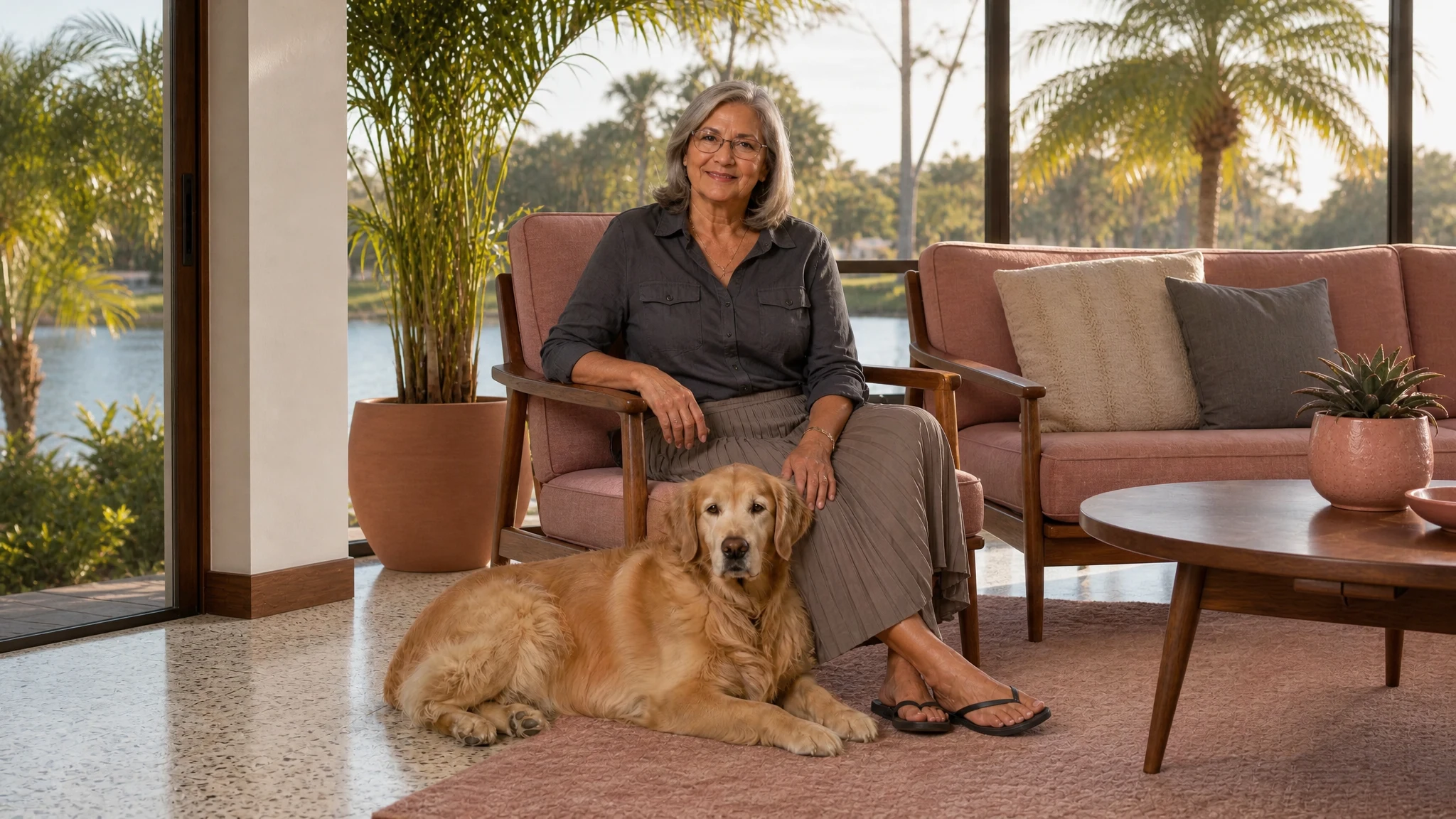
A household with two dogs, or a dog and a cat, runs into a question that a single-pet owner never asks: does one registration cover everyone? It does not. Registration is lifetime and per pet, and the letter behind it has to support each animal.
This guide walks through how to register more than one emotional support animal in Florida, what a housing provider will look at when the number goes up, and how to keep a clean record for every pet.
Registration with us is built around the animal, not the household. When you register a pet, that pet gets lifetime registration in our ESA and lost pet recovery database, with its own name, type, breed, sex, birthday, weight and photo. A microchip number is optional, but if you have one, add it. A shelter or anyone who finds the animal can look it up by microchip number or ID number and reach you.
That design is why a second animal means a second registration. A record that described both your dog and your cat would help nobody who found one of them wandering after a storm. Each animal also receives its own animal ID card and certificate, which identify that animal and carry no legal housing rights.
Our guide on how many emotional support animals you can have in Florida adds that one person's letter never covers another person's animal.

To register an animal you must be eligible for an emotional support animal and have an ESA letter. That sentence is the whole order of operations. A household with several animals should not treat the second pet as an exception.
The letter itself is written by a licensed health care or telehealth practitioner, and under Florida Statute 760.27 that practitioner must be Florida-licensed or have an established in-person relationship with you. Our breakdown of ESA letter requirements and who can write one in Florida covers the clinician rules in detail.
Whether a second emotional support animal is appropriate is the clinician's decision, not ours and not yours. If you want two animals supported, say so openly during the evaluation and explain what each one does in your daily life. A clinician will not simply add a second animal on request, and approval is never guaranteed.
Registering a second or third pet does not create housing protection for that pet. Registration gives no ESA rights and no additional rights. Only a letter from a licensed practitioner carries housing rights under the Fair Housing Act and Florida Statute 760.27, and an online registration alone is not sufficient documentation.
Florida has no statutory cap on emotional support animals. HUD's FHEO-2020-01 notice directs housing providers to assess each requested animal individually, and the question each time is whether that specific animal is necessary for equal use and enjoyment of the home. So two animals are possible, but nothing makes them automatic.
In practice, expect a second animal to draw closer scrutiny than the first. A landlord may ask for reliable information from your practitioner, but may not demand a diagnosis or medical records. The dispute over a second animal is usually about documentation, not about a number. Our guide to how Florida landlords verify an ESA letter shows what that review looks like.
| What a Provider Weighs | Why It Matters for Two or More ESAs |
|---|---|
| Documentation for each animal | The letter should identify the animals it supports |
| Direct threat or substantial damage | Judged for the specific animal, not the household |
| Undue burden or space | Can matter more as the count rises |
| Community rules | Condo and HOA limits do not automatically override a request |
If a request is refused, read when a landlord can legally reject an ESA in Florida, or start at the ESA housing laws hub.
Households in Chapter 718 condominiums and Chapter 720 homeowners' associations often face a written pet limit, such as one pet per unit. That clause does not decide an ESA request on its own, because the board must evaluate it as a reasonable accommodation. The board may still look at each animal's documented need, size and conduct, and practical factors such as unit size can be part of that review.
If you are asking for two, send one dated written request that names both animals and attaches the letter. Keep it plain. You do not need to describe your health history. Our walkthrough on whether an HOA or condo association can deny an emotional support animal in Florida lays out the request, the board review and the escalation steps.
A landlord or board may look up the registry listing, but no landlord is required to use it or accept it. Do not send ID cards in place of the letter. Lead with the letter, and treat the ID card and certificate as identification for the animal.
The registration steps are the same for every animal. If you have a dog and a cat, you will go through them once for each. Have the letter, your contact details and each animal's information ready before you start.
For a plain-language account of what registration is and is not, read our guide to ESA registration in Florida. It is not a legal requirement, and sites that imply otherwise are the ones to avoid.
With one animal you can get by on memory. With three you cannot. A short file per animal makes a housing request, a vet visit or a lost pet call much easier. This is our practical suggestion, not a requirement of the statute.
Letters do not last forever, so note when yours was issued and check our guide on whether ESA letters expire in Florida. Registration is a lifetime record per pet, but the letter is the document a housing provider will actually read.
Lost pet recovery is the practical reason many multi-pet households register every animal. Hurricane season runs June to November, and evacuations from coastal areas can be sudden. Many shelters and hotels limit animals, so plan transport, carriers, medications and records for each pet.
If your honest answer is that one animal supports you, register one. Florida Statute 817.265 addresses knowingly falsifying ESA documentation, and an extra animal you cannot justify to your clinician is a risk with no benefit. Read about real Florida ESA letters and fakes before you decide.
Below, we answer the most commonly asked questions about Registering More Than One ESA in Florida.
No. Registration is lifetime and per pet, so each animal needs its own registration, record, photo, and animal ID card and certificate.
The letter should identify the animal or animals it supports, and the clinician decides whether each one is appropriate. Discuss your plan openly during the evaluation.
No. To register you must be eligible and have an ESA letter. Registration is optional and cannot replace the letter.
No. Registration gives no additional rights, and no landlord must accept the ID card or registry listing. Each animal is reviewed on its own documentation.
Keep the letter, the animal ID card and certificate, a current photo, the microchip number if any, and every written exchange with your housing provider.
Keep reading: our other guides in this topic, newest registration guides first.

Plain answers to what Floridians ask about emotional support animal registration: what it is, who can register, what it gives, what it does not.

Registering an emotional support animal in Florida takes three steps. See what you enter, what arrives by mail, what unlocks, and the mistakes to avoid.

The five benefits of optional Florida ESA registration, what each one does and does not do, and which Florida owners get the most from each.

A Florida checklist for ESA registration: your eligibility, your ESA letter, your animal's details, a clear photo, and the mistakes that slow people down.

Searches for an ESA letter Florida free offer, an ESA letter Florida template or an ESA letter Florida PDF usually end in a document that a Florida landlord, condo board or…

Florida owners often ask whether an emotional support animal letter has a shelf life. The short version: no fixed expiration date appears in Florida Statute 760.27 or in…
If you have your ESA letter and are ready to register your animals, start with the Florida intake on our homepage. Registration is optional and does not replace the letter.
Register My Florida ESABrowse All Florida ESA GuidesRegistration is optional. It is not a substitute for an ESA letter and gives no ESA rights or additional rights; a letter from a licensed health care or telehealth practitioner is what carries housing rights.